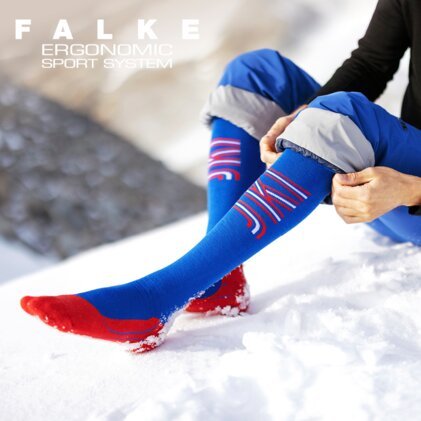
Have you ever heard of heated ski socks? Whether you prefer skiing, snowboarding or another winter sport, these little helpers keep your feet cosy and warm in the snow. So you can enjoy your outdoor adventures without icicles on your feet. The only ice you'll find will be in form of a cube in your après-ski drink.
We have compiled the most important information about heated ski socks for you.
What are the advantages of heated ski socks?
Perhaps you've already read our article on heated gloves, in which we explained that the fingers receive less blood flow than the rest of the body. The same applies to your lower extremities. When it's cold, the body reduces blood circulation to your feet and toes in order to maintain a body temperature of around 37 degrees. This leads to a feeling of coldness, they feel stiff, and your strength and mobility decrease. In extreme cases, the temperature in your toes can drop to around 28 degrees Celsius.
Heated ski socks provide a remedy here: unlike conventional ski socks, this special models immediately deliver the necessary warmth to critical areas, stopping shivering and stimulating blood circulation. The result: You are back to full performance. But this not only means better performance and more fun, but also a lower risk of injury.

How do heated ski socks work?
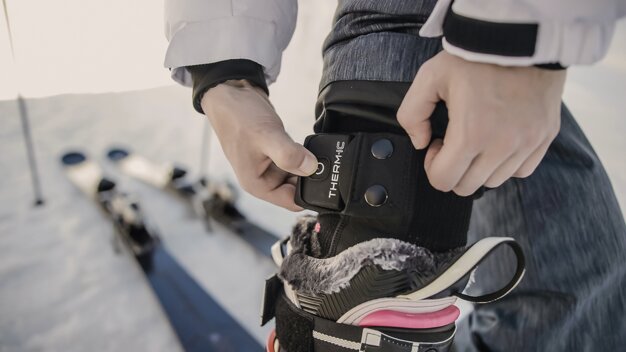
Heated ski socks are equipped with hidden heating elements that distribute warmth optimally to your feet. Depending on the model, the elements are located either at the front of the foot or along the entire sock.
Many models allow you to adjust the heat level of the socks at the touch of a button. Some even offer special apps that enable you to monitor and adjust the setting in real time via Bluetooth on your mobile phone.
Most of these little helpers use rechargeable lithium-ion batteries that are charged with a small cable. This is usually a USB-C connector, sometimes a USB-A or a magnetic charging model.
What materials are used in heated ski socks?
Heated socks are often made from high quality performance fibers or a mix of these with merino wool or cotton. This keeps the foot coverings breathable, elastic and pleasantly dry, while the warmth is distributed evenly. The heating elements are firmly integrated into the knitted fabric so that they do not bulge or restrict freedom of movement.
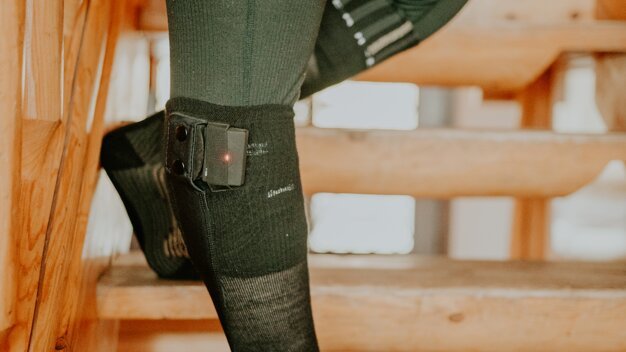
Some premium styles have padded or reinforced zones in the toe and heel areas to prevent pressure points. Others use compression-support fabric to increase circulation and reduce fatigue. This pays off on long days of skiing.
What should you look for when buying heated ski socks?
Buying heated socks is about more than just choosing your favourite color. If you want to enjoy your new accessory for longer and make sure it's right for your needs, here are some things to consider:
- Control & ease of use: Most heated ski socks have three to five setting options. Some premium models can even be controlled continuously via an app.
- Batteries and runtime: Battery life ranges from 4 to 10 hours depending on model and heat configuration. Products with extension cables allow you to carry the batteries in your jacket or trousers. If a short charging time is important to you, choose some with a double charger. This allows you to fully reload both batteries at the same time.
- Fit: Make sure the heated ski socks fit well with your ski boots. An ultra-flat battery can be an advantage for very narrow models.
- Price and quality: These handy little helpers are an investment. However, inexpensive versions often heat unevenly and quickly lose their performance. High-quality heated ski socks are known for their even warmth and durability.
How do you properly care for your heated ski socks?
To ensure that your heated ski socks are reliable for many winters to come, you should take good care of them.
Here are the most important tips:
- Washing: Always remove the batteries before washing and place the caps on the contact points to prevent water from entering. Hand wash or gentle cycle at 30°C maximum with a mild detergent is best. Fabric softener can damage the heating elements
- Drying: Always air-dry heated ski socks. Never put them in a dryer or on a radiator.
- Battery care: Charge the batteries regularly, even out of season. In between, a partial charge of about 50% will maintain battery life.
- Storage: Keep the socks flat in a dry place. Avoid kinks in the heating elements and disconnect the batteries when not in use.
With proper care, heated ski socks will last for many years and keep your feet comfortably warm on every day of skiing or snowboarding.
By the way: Children are often particularly sensitive to the cold. And as we all know, when the little ones are no longer having fun, the day of skiing is over. For great family days in the snow, we have put together some useful information about children's ski socks.
Frequently asked questions about heated ski socks
How long do the batteries in heated ski socks last?
Depending on the model and heat configuration, a battery charge will last approximately 4 to 10 hours. High-end heated socks offer replaceable batteries or some that can be controlled via an app so you can adjust the heat.
Can heated socks be washed?
Yes, most heated socks can be machine washed if you remove the battery first. However, you should use the gentle cycle without fabric softener. Follow the manufacturer's care instructions to prolong the life of the heating elements.
Are heated ski socks also available for children?
Yes, some brands offer heated socks in children's sizes. Make sure the cables are safely routed, the materials are soft and the batteries are CE marked.
What is the difference between heated socks and heated insoles?
Heated insoles only warm from below, while heated socks distribute heat evenly throughout the entire foot. Most people find this much more comfortable, especially on longer trips on cold days.
INTERSPORT Rent tip
The RENTertainer recommends
With heated ski socks, cold feet are a thing of the past and you can enjoy your day of skiing from the first to the last run.
If you need more suitable equipment for your winter adventure: You can rent everything you need at more than 800 INTERSPORT Rent shops worldwide. The RENTertainers on site will be happy to advise you on the perfect ski setup, snowboards, snowshoes, poles, helmets or ski clothing. Just drop by, try it out and get started well warmed up!
Related articles
You may also be interested in: